
9/14/2010 From Ellen: I saw this article today from “Today @ Colorado State University” online newsletter. It also has interesting links from the Colorado State Forest Service at the end.
Dangerous conditions helped lead to wildfires currently raging in Front Range foothills.
As long as people continue to build in or near the mountains, fires will always be a threat.
Doug Rideout had a bad feeling Sept. 5 as he returned from a day trip in the Poudre Canyon.
“That weekend, the physical conditions were just perfect for a big fire,” said Rideout, a professor in Colorado State University’s Department of Forest, Rangeland and Watershed Stewardship. “As we were coming down the canyon I said to my wife that, if anything got started, the conditions were just perfect for a fire to go fast and big. I could visualize the hillsides and drainages going up – more so than at any time I can think of in the last 12 months.”
Ideal fire conditions
Those conditions – very low humidity, high temperatures, gusty winds, and plenty of dry grasses – are not uncommon in early September. And as it turned out, Rideout’s fears became reality some 50 miles to the south when fire erupted west of Boulder. Since that time, the Fourmile Canyon fire has burned more than 6,000 acres and destroyed 169 homes. More than a week after it ignited, the fire is not fully contained and many evacuated residents have not been cleared to return to their homes.
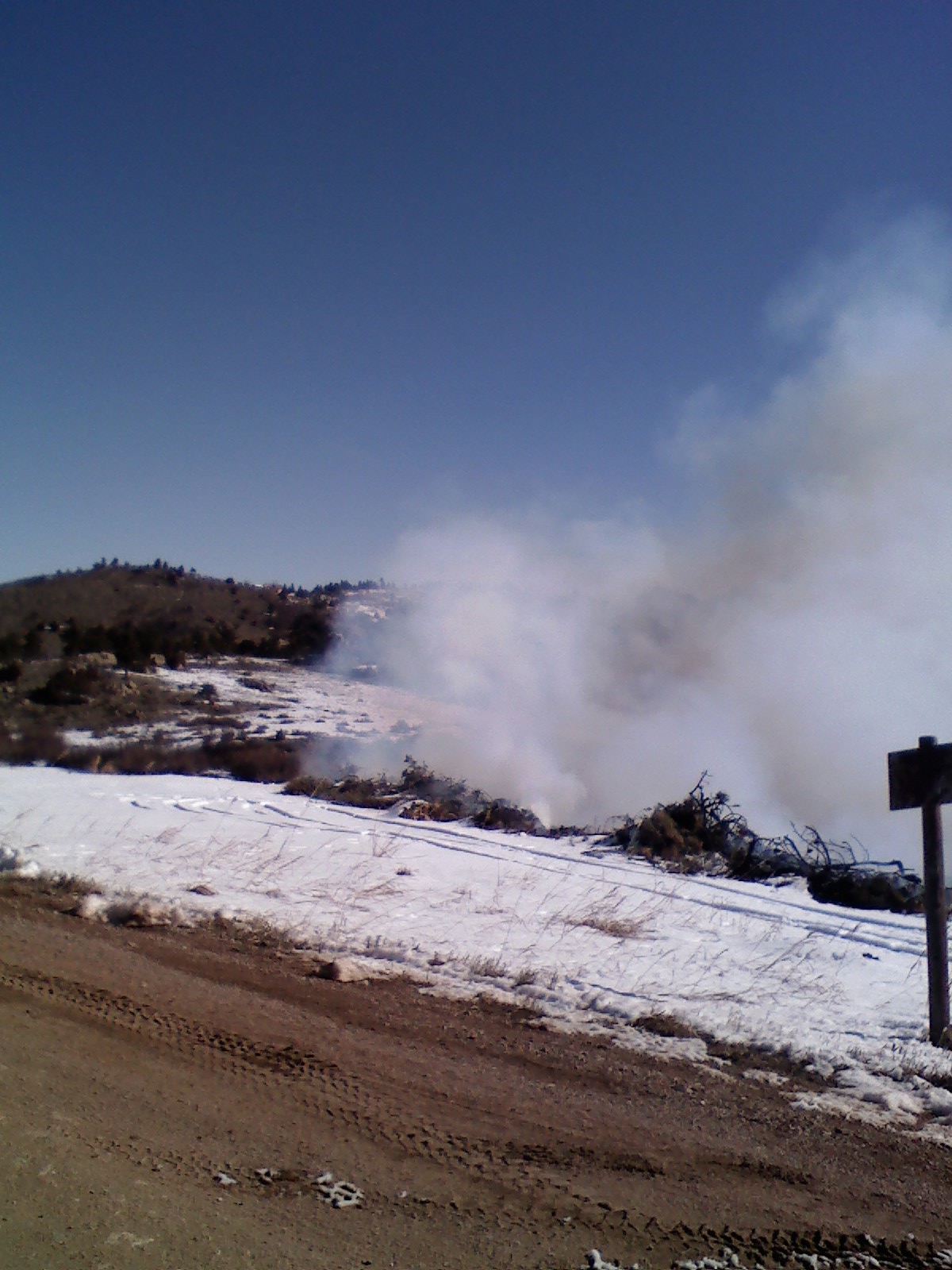
Sunday, with those conditions still in place, another fire – this one west of Loveland – sprung to life. The Reservoir Road fire already has claimed at least two homes and continues to burn out of control.
Sherri Lebeda, an administrative assistant in CSU’s Department of Communications and Creative Services, grew up in the Mountain Meadows subdivision, which was one of the areas threatened by the Fourmile Canyon fire. Her parents evacuated their home of 40 years and spent several days living in their RV.
“It was a really hard time (last week) because we knew my parents had been evacuated by we weren’t able to talk to them, so there were some really anxious moments,” said Lebeda, whose husband, Boyd, is a district forester in Fort Collins for the Colorado State Forest Service. “The devastation up there is just amazing. My parents are very fortunate to still have their home. I really feel for the people who have lost their homes; I can’t imagine what that’s like.”
Living in foothills brings risks
Lebeda’s father has been a member of the area’s volunteer fire department for four decades. His home was surrounded by ponderosa pines and grassy meadows – perfect fuel for a hungry fire. But living in Colorado’s foothills comes with built-in threats that most homeowners willingly accept. He and his wife also evacuated in 1989 when a fire threatened their home.
“Honestly, the people who live up there are willing to live with the risk because they enjoy it so much,” she said. “I loved growing up there; it’s a great place to live.”
As long as people continue to build in or near the mountains, fires will always be a threat. But homeowners need to be particularly vigilant when conditions are ripe for a fast-moving fire.
Colorado, California fires similar
The wet Colorado spring created excellent growing conditions for grasses and other fuels perfect for wildfires.
Rideout said it has been several years since he has seen conditions similar to those currently in place along the Front Range. He compared conditions to those in Southern California when Santa Ana winds combine with chaparral conditions (hot, dry, and plenty of fuel) to create the massive fires that threaten lives and homes in the foothills.
Those same conditions were in place for two of Colorado’s most famous recent events: the Buffalo Creek fire in 1996, and the Hayman fire in 2002. Both caused extensive damage and costs millions of dollars to fight.
“When we get into those kinds of conditions, we learn just how powerful that type of fire is and how fast it can move and cut people off from evacuation,” Rideout said. “It’s hard to explain and visualize unless you’ve been there and seen it. All I know is that (Labor Day) weekend I was thinking that getting out of the mountains was a really good idea. I could just feel it, that something bad was about to happen.”
Rideout said the wet Colorado spring created excellent growing conditions for grasses and other fuels perfect for wildfires. But while trees killed by the recent mountain beetle infestation can burn quickly, he doubts those trees played a large role in the recent fires.
“Everyone thinks that the pine beetle problems make conditions much worse, but typically that’s only for the first year or two after infestation,” he said. “At first, when the needles turn bright red, the trees can be quite flammable. A year or two later, they are far less susceptible to fire.”
Homeowners can prepare for fires
The best way for homeowners to protect themselves and their property is to remove as much of the natural fuel fires need to spread. All flammable materials should be cleared away from structures, including trees and ground fuels. Planting fire-retardant plants near structures can also create a measure of protection. Rideout said homeowners who don’t take such precautions are literally playing with fire.
“The (Fourmile Canyon) fire is a really good wakeup call for people living in that urban interface to take a hard look at what they can do to protect their property,” he said. “Even the best efforts are not always successful, but it helps an awful lot and it’s often very effective.
“It’s also a good wakeup call for all of us to realize how fast and dangerous these fires can be. It’s really time for people who haven’t prepared themselves to take action. It can be costly but it can also be very costly if you don’t.”


 Glacier View Meadows Ecology