Category Archives: Wildflowers

Crellin Lake: Just add water!

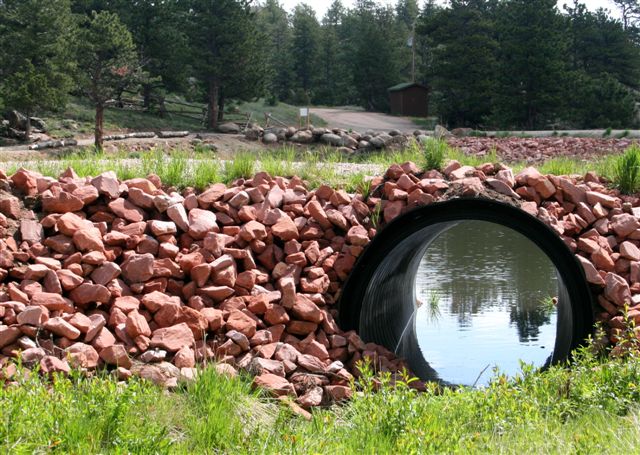
Exciting update from Jeff:”I thought that maybe others in the community would enjoy taking a peek at the progress we have made at Crellin Lake. This beatiful spring of 2009 is really contributing to our success of rebeautifying the neighborhood. The constant trickle of runoff and natural spring waters has created a reality where once only a picture in are minds existed.

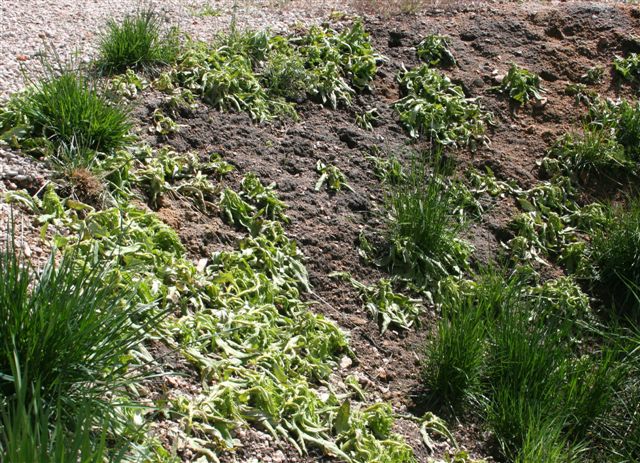
Crellin Lake is nearing capacity. We are seeing a rise in water level of about 2″/day. That, coupled with the growth and maturity of some natural and hand-sown grasses, has made for a most picturesque setting and community recreation spot.

I took a relaxing stroll around the lake this morning, June 9th, and snapped a few pictures of Crellin Lake and the immediate surroundings. Hope you enjoy the view as much as I did. Regards, Jeff Gibford

May Wildflowers

May flowers seen in GVM, please email us your sightings.

Blue-eyed Mary
Blue-eyed Mary

5/31/09 Jim emailed: “spotted another even more diminutive annual called, appropriately, Blue-eyed Mary or Hunchback Flower (Collinsia parviflora). I knew it from some work I did as the taxonomist on a multi-agency, post-fire study a few summers back at the Sheldon National Wildlife Area in the northwestern corner of NV. Only one species in the genus, parviflora means small-flowered; but a beautiful one it is. Weber & Wittmann write: “Very common but inconspicuous and delicate annual, blossoming very early at low altitudes. . . . Leaves usually strongly purplish-tinged. The hump-backed corolla is distinctive.”

Madwort
Madwort

5/31/09 Jim emailed: Madwort (Asperugo procumbens). I spotted this amongst other weeds as I was climbing my stairs to the house; the tiny purple flowers catching my eye. My immediate thought was a borage. From Weber & Whitman: “The name borage comes from a Middle Latin source, burra, meaning rough hair or wool, just as the modern word, bur.”  One of the few exceptions to having very stiff hairs on the stems and leaves, our bluebells (Mertensia lanceolata) now in full bloom. As for this madwort, Weber & Whitman state: “Alien on disturbed ground at the base of the Front Range. The enlarged and flat-open calyx becomes conspicuous after the flowers wither, and it is provided with hooked bristles. An unmistakable plant.”

Tufted evening primrose

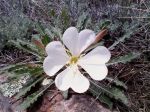
5/27/09 Ellen sent: Tufted Evening Primrose (Oenothera caespitosa). We have three plants blooming our “back yard.”


Continue reading May Wildflowers

April Wildflowers

Spring Beauty
Spring Beauty

April 24-26, 2009: Jim Erdman reported these April blooms in GVM. He welcomes comments and additions.

  • Ball Cactus (Pediocactus simpsonii)
  • Bluebells; Chiming Bells (Mertensia lanceolata)
  • Biscuit Root; Wafer Parsnip; Wild Celery (Cymopterus acaulis)
  • Common Dandelion (Taraxacum officinale)
  • Crane’s Bill; Alfilaria; Filaree; Red Crane’s Bill (Erodium cicutarium)
  • Dwarf Mountain Fleabane (Erigeron compositus)
  • Mouse-ear (Cerastium strictum)
  • Pasqueflower (Pulsatilla ludoviciana)
  • Spring Beauty (Claytonia rosea)

Click “more…” to see images and details from Jim. Continue reading April Wildflowers

Mystery Plant ID

Mystery plant
Mystery plant is White Scorpion-weed

During our October 2008 workday at Crellin Lake, a large, odd-looking dried plant was spotted by Judy and Harry. They pulled it up from the north east lake shore and kept it through the winter. During our April Ecology meeting,  Judy turned over the unusual specimen to me.  I just got back from the CSU Herbarium where Jennifer Ackerfield, Research Associate, identified the plant and showed me the pressed, reference specimen. The name of the plant is White Scorpion-weed or White Phacelia (Phacelia alba Rydberg). Continue reading Mystery Plant ID

Our Mountain Cactus Story

GVM Ball Cactus by L. Huckabee 5/20/09
GVM Ball Cactus, L. Huckaby 5/20/09

Jim Erdman sent this information: Ball or Mountain Cactus (Pediocactus simpsonii) is a common and beautiful cactus you will find throughout Colorado. It is a globular type of cactus reaching up to 6 inches in diameter and is strongly tubercled [meaning rounded projections]. Prickly-pear seems to be more abundant than the Ball or Mountain Cactus, probably because it’s found in more visible masses, especially when in flower. Continue reading Our Mountain Cactus Story