4/4/2010 Email from Jim E: “Spring has still not sprung after two weeks …but Western Spring Beauty (Claytonia rosea) has on the slopes of my place (at 7,500′). And here it’s Easter, yet our early bloomer of Easter season, the Pasqueflower (Pulsatilla ludoviciana) has yet to appear!”
Gate 3 Slash Pile Burned Today
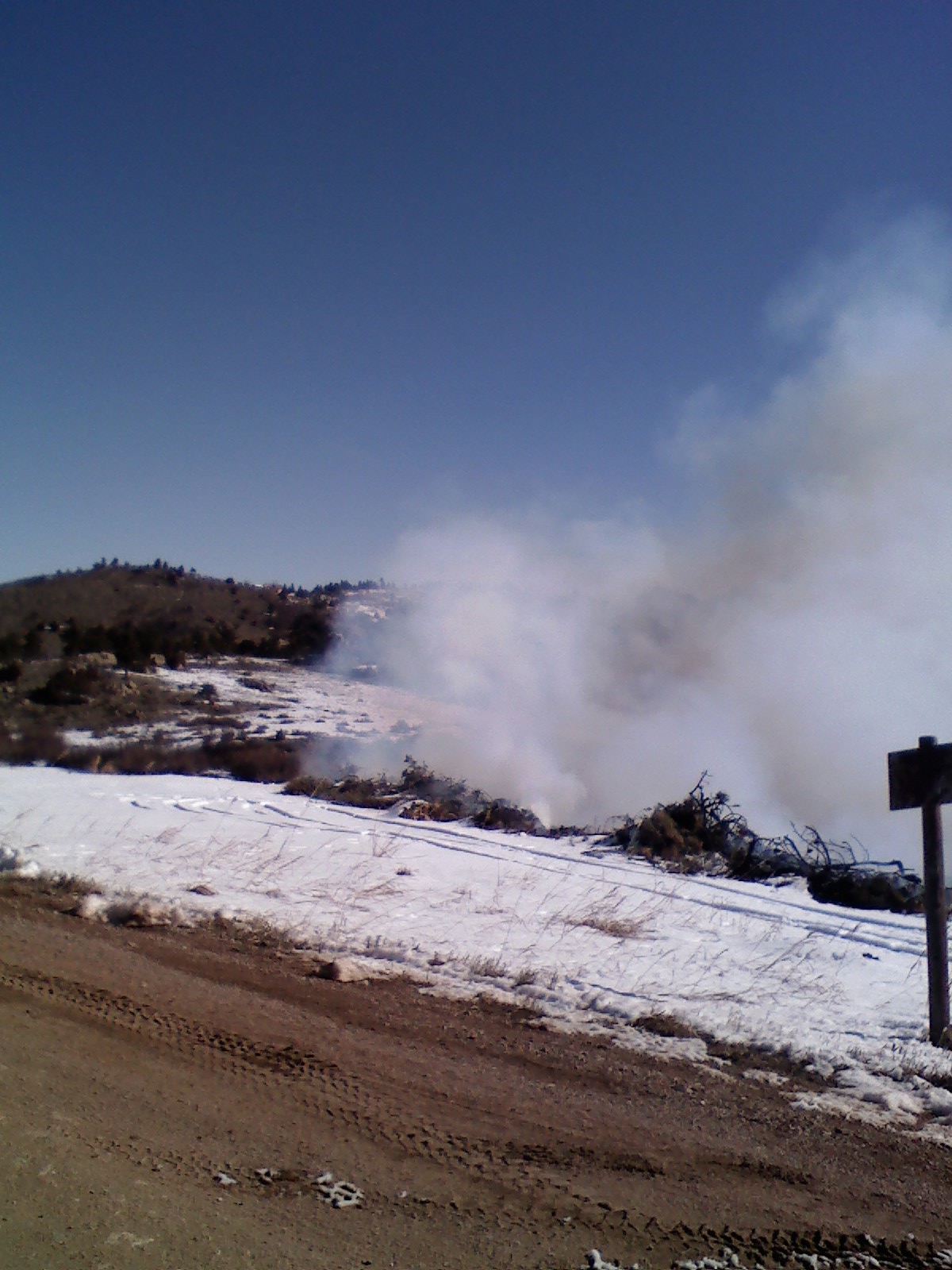
3/28/2010 As I drove by the Gate 3 slash pile this morning at 10am, it was really smoking with only a few flames visible. The Glacier View fire trucks were just leaving and I waved to Mary Hench who was driving one of them. Snow cover and calm wind were ideal conditions for burning last season’s forest “thinnings.”
First Spring Beauty seen March 22
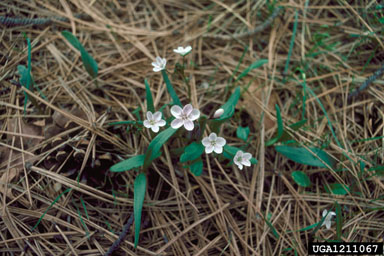
Jim emailed on 3/22/2010: “A single blossom of Western Spring Beauty (Claytonia rosea) I spotted on an open, south-facing slope by my house this afternoon. Last week I saw just the leaves of this very early bloomer, yet it’s likely it may have burst into flower — yes, two days ago on the vernal equinox. Spring. The second herbaceous species that I’ve seen in flower.” Jim added this description from Weber and Wittman: “An extremely early bloomer in pine forests, outer foothills of the Front Range.”
Early Blue-eyed Mary Spotted
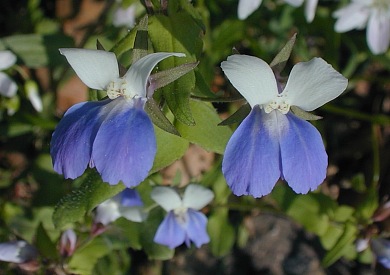
3/3/2010 Jim E. emailed what may be the first flower blooming in GVM this year, thanks Jim!! He wrote: “Collinsia parviflora, spotted today as I sat on my granite bench, leaning up against the granite cliff-face west of my house.
My eye first caught the bright green of a moss, likely Tortula ruralis. But then the extremely tiny bloom of the above, the basal leaves tinged in purple, unmistakable. Weber and Wittmann (2001) say “Very common but inconspicuous and delicate annual, blossoming very early at low altitudes. … Leaves usually strongly purplish-tinged.
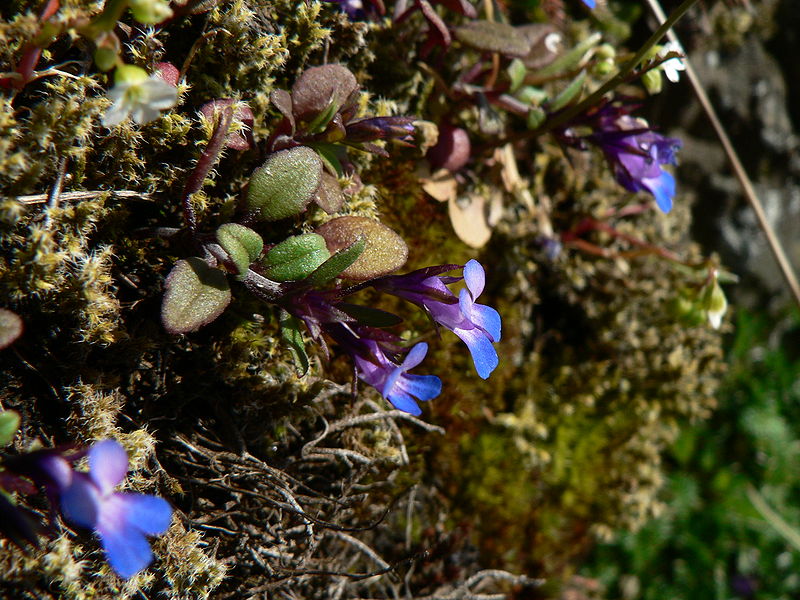
I’d say that March 3rd IS an early bloom! You may recall that we displayed same at GVM’s Annual Meeting last June. That, along with an array of shrubs, mostly in the Rose Family, that were in bloom then. Possibly a note in your EcoBlog. In the Figwort Family, along with Indian Paintbrush and the many Beard-tongues (Penstemon).”
Juniper stump dates to 1608!
1/19/2010 Jim E. forwarded an email from Laurie Huckaby, tree-ring and fire-history specialist from with the USDA Forest Service’s Research Center in Fort Collins. Laurie wrote about the analysis of a charred juniper stump collected within a GVM greenbelt. Laurie said: “I did manage to date the section that we cut from that stump that John [Popp, Forestry Technician, USDA Forest Service] pulled up last summer. It was a Rocky Mountain juniper, and the pith date was 1608 AD. Not the oldest juniper I’ve found in the area, but definitely one of the older ones. The outside date was 1854, and I think that was pretty close to the death date. Juniper tends to burn up in fires and not make scars, but this one actually had scars from fires in 1685, 1696, and 1735. All of those were widespread fire years in the area.”
 Glacier View Meadows Ecology