
Read about the observations of Linda Bell and Jim Erdman on the distribution of Mountain Sagebrush in GVM and Red Feather Lakes. Jim also reviewed the recent changes in sagebrush taxomomy he first discussed in his post last fall.
Read about the observations of Linda Bell and Jim Erdman on the distribution of Mountain Sagebrush in GVM and Red Feather Lakes. Jim also reviewed the recent changes in sagebrush taxomomy he first discussed in his post last fall.
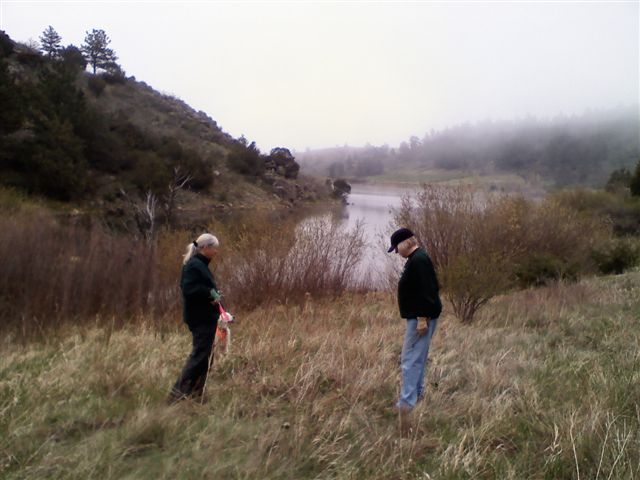
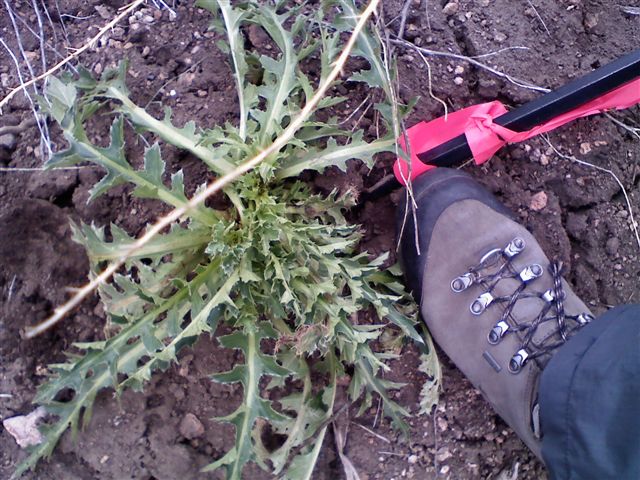
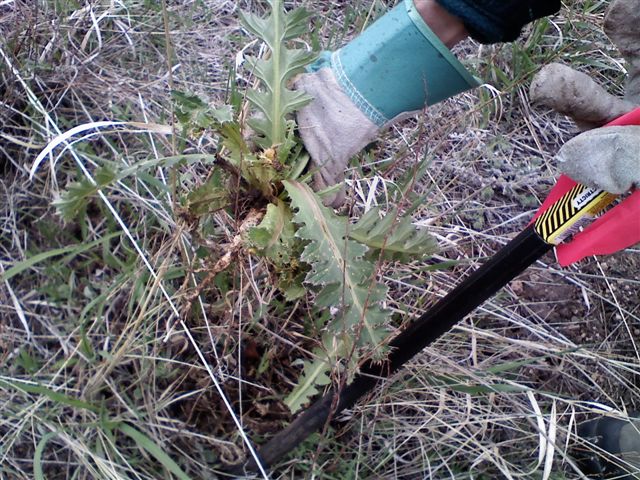
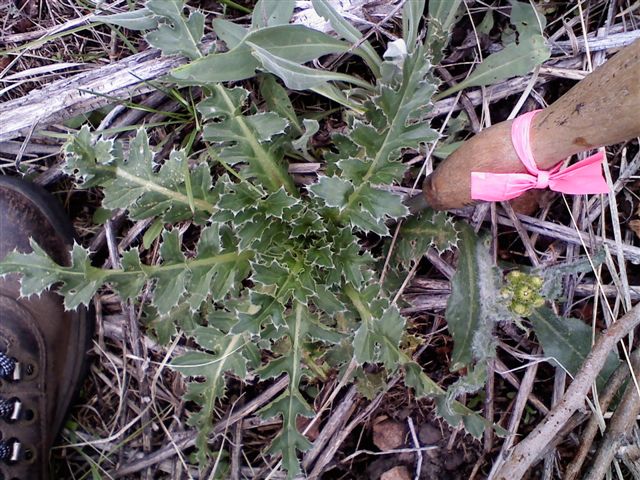
Last Saturday, 5/16/09, Ellen, Harry, Judy and Linda B. met at Riddle Lake to remove musk thistle rosettes and view a patch of Mountain Sagebrush Linda had spotted on the south slope above the lake. Jim Erdman joined us to view the sagebrush and wildflowers. Using shovels, weed tools, and a crowbar, we dug out ~500 musk thistle rosettes, which have a distinctive white outline around their leaves.


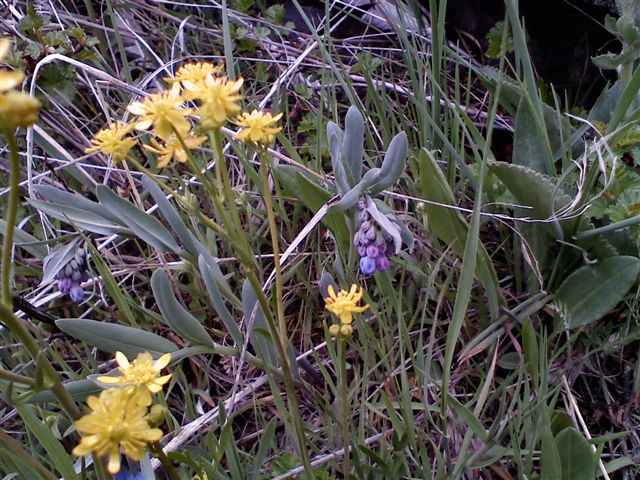

May flowers seen in GVM, please email us your sightings.
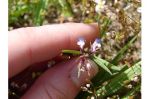
5/31/09 Jim emailed: “spotted another even more diminutive annual called, appropriately, Blue-eyed Mary or Hunchback Flower (Collinsia parviflora). I knew it from some work I did as the taxonomist on a multi-agency, post-fire study a few summers back at the Sheldon National Wildlife Area in the northwestern corner of NV. Only one species in the genus, parviflora means small-flowered; but a beautiful one it is. Weber & Wittmann write: “Very common but inconspicuous and delicate annual, blossoming very early at low altitudes. . . . Leaves usually strongly purplish-tinged. The hump-backed corolla is distinctive.”

5/31/09 Jim emailed: Madwort (Asperugo procumbens). I spotted this amongst other weeds as I was climbing my stairs to the house; the tiny purple flowers catching my eye. My immediate thought was a borage. From Weber & Whitman: “The name borage comes from a Middle Latin source, burra, meaning rough hair or wool, just as the modern word, bur.” One of the few exceptions to having very stiff hairs on the stems and leaves, our bluebells (Mertensia lanceolata) now in full bloom. As for this madwort, Weber & Whitman state: “Alien on disturbed ground at the base of the Front Range. The enlarged and flat-open calyx becomes conspicuous after the flowers wither, and it is provided with hooked bristles. An unmistakable plant.”
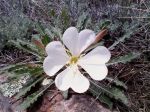
5/27/09 Ellen sent: Tufted Evening Primrose (Oenothera caespitosa). We have three plants blooming our “back yard.”

Jim Erdman sent this information: Ball or Mountain Cactus (Pediocactus simpsonii) is a common and beautiful cactus you will find throughout Colorado. It is a globular type of cactus reaching up to 6 inches in diameter and is strongly tubercled [meaning rounded projections]. Prickly-pear seems to be more abundant than the Ball or Mountain Cactus, probably because it’s found in more visible masses, especially when in flower. Continue reading Our Mountain Cactus Story
Today Jim Erdman’s provisional plant list for GVM was added as a page to our blog for easy access. Jim and his colleagues have identified ~227 species categorized by: trees, shrubs, grasses-sedges-rushes, forbs, ferns, mosses, lichens and fungi. Please submit a comment here or on the “Plant List” page with any new sightings you find this season. Thanks!!
 Glacier View Meadows Ecology