Lecture Series: Wildflowers!

(The program begins at about Minute 7:00 of the video.)

This is a program and a topic that draws people who love flowers, starting with Margie Caswell, who shared her pictures and stories with great passion. A couple of dozen folks joined us in this presentation, and their attention was focused and intense.
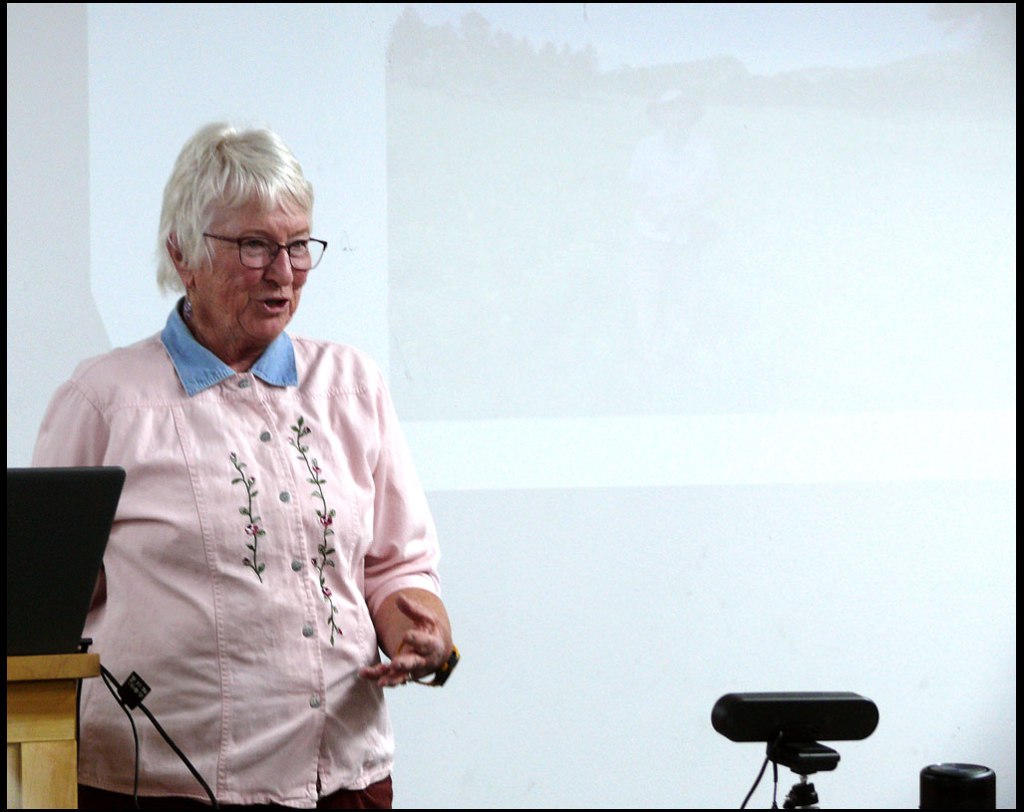
While there were clearly many listeners who knew their wildflowers pretty well, Margie’s presentation was especially enjoyable because of her simple, straightforward language.

“I was an elementary school teacher,” she introduced herself, “so I learned to keep things pretty simple in my explanations. I don’t use any latin names for the flowers. I like to call them by their common names.”

Her introduction continued with her sharing of what she most often refers to for reference books and materials. Though she had copies of her favorites on display, it would have been useful to have seen a printed list of materials–the one presented on screen was not remotely readable.

If you’re interested in printing this out, here’s a printable .pdf file you can download.

Many people seemed to appreciate her organization of flowers by color, and her descriptions of seasons and time of year were helpful. She gave particularly good details about where in our mountain neighborhoods she found her flowers. Above all, the photographs of her flowers, as shown in her PowerPoint presentation, were excellent.

Many of Margie’s photographs were really exceptional, closeups with great framing, zoomed in to bring the flowers to the forefront. Those of us who’ve tried capturing our favorite flowers know that’s not the easiest thing to do. We did lose some clarity in the photographs by the projection onto a bare white wall, and this is an issue our Lecture Series Planning Team probably needs to take a look at as we move forward.

In all it was a relaxed and fun evening being immersed in the floral and wildflower beauty our area abounds in, and a great inspiration for the upcoming season of exploration.

Next Month’s Mountain Living Lecture Series: Weed and Cheatgrass Identification and Management, June 11.

Many thanks to Terry and Susie Campbell and to Beth and Jim Lyne for putting together tonight’s presentation, and to Susie Campbell for her brilliant capturing of it on Zoom. It’s not as simple as it seems.
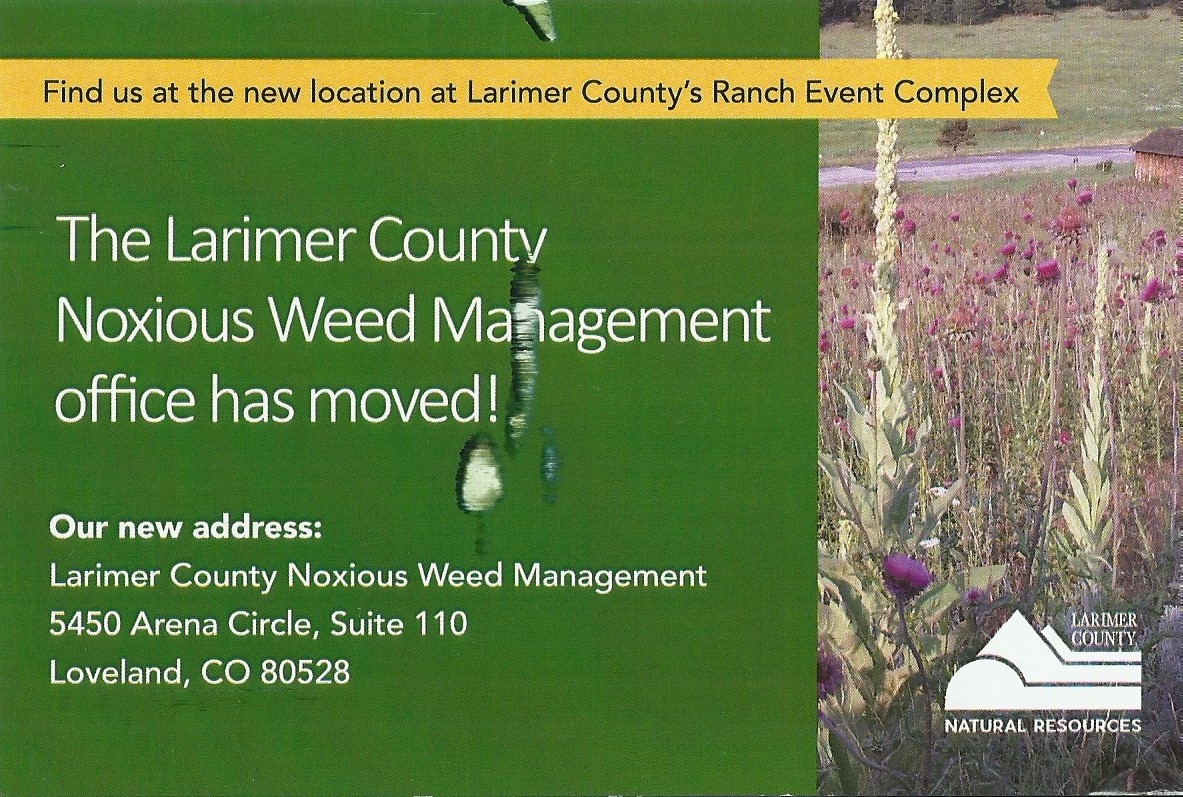
Larimer County Noxious Weed Management Office

This office has moved to a new location.

The Ranch Event Complex is for sure not as convenient for those of us living in Livermore, but it is more central to the burgeoning population growth in southern Larimer County.

Fortunately, our access to Casey Cisneros continues, no matter where his office address is. He’s been an invaluable asset for us in staying one-step ahead in our efforts to manage invasive plants.

For residents of Glacier View Meadows, your first and most readily available resource for managing your landscape is the GVM Ecology Team. We’re always here for you. Use the Contact Us form on the Home page of gvmEcology.com.

GVM Old Forest

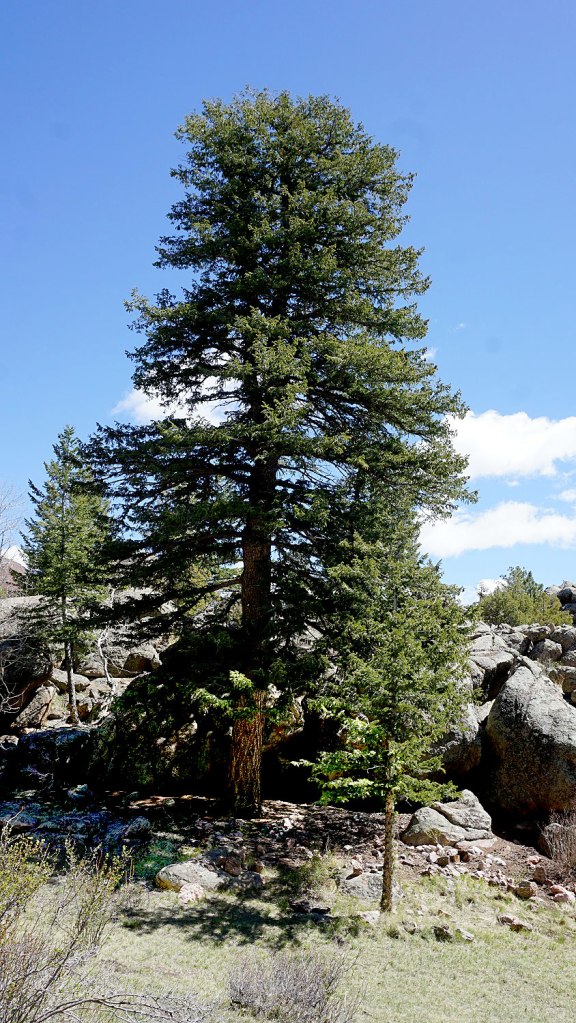
We’re paying closer attention these days to some of the treasures we have in our local forest, especially the number of ancient trees.

29.5 inch Douglas Fir against a granite outcropping, under a sunny blue sky.

Our work is being hugely assisted by contact we’ve been able to make with Laurie Huckaby, the Forestry Service specialist in Ponderosa pines who assisted our neighborhood those many years ago. She’s now retired, but has sent us invaluable records and has offered to continue supporting our current work.

We live with such an abundance of trees it’s easy to take them for granted–oh, yeah, another tree. Truth is, to know a tree has been growing in our mountain neighborhood for centuries is a reflection of a real miracle.

With the history of Colorado so linked with forestry and mining, the number of legacy trees is actually limited. Entire forested mountaintops, as far as the eye can see, were stripped clear as Colorado was settled, for forestry products, for wood for building, for frameworks supporting mining shafts. And intentional burning of forests was an accepted method for prospecting gold.

Our corner of Northern Colorado escaped much of this historic devastation. But recent events remind us wildfire is always a danger, and changing global climate events pose increasing threats to the forests that surround us.

So we pause in our lives to appreciate these wonders of nature we live with.

Ted Sammond, naturalist and an active member of the Ecology Team at GVM, went out this week to explore and document some trees that appear to have gone unnoticed in the 2009 surveys our residents did.

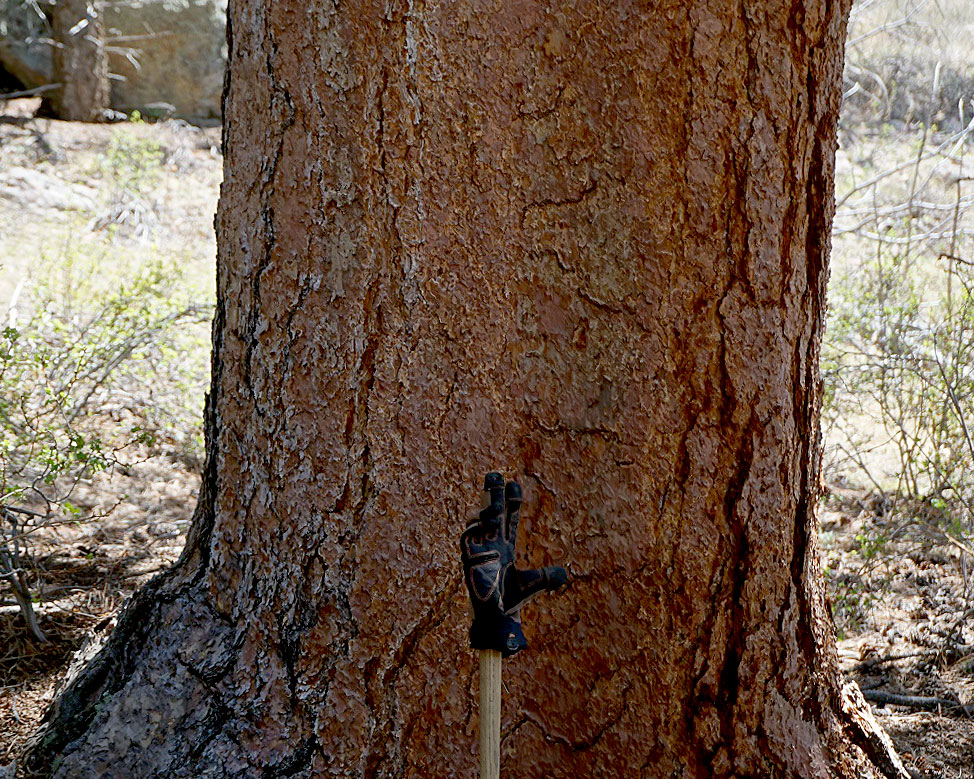
“The biggest tree I saw today was 36” diameter at breast height.

“The picture of it does not do it justice as it so wide that when I backed up to get the whole tree in the picture it looks small.”

Our studies and building of our records of these trees will continue.

Ponderosa Pine, 36" diameter at breast height, under a sunny blue Colorado sky.
36″ dbh Ponderosa Pine with pole, for scale.

Red Crossbill

A year later, I come across a note from resident biologist Terry Campbell that he and Susie have spotted a Red Crossbill in a ponderosa pine out their deck. March 22, 2023.

Nice image. Nice catch.

I wonder if we’ll ever have another new bird sighting to add to the extensive list that’s grown over the years. Take a look at the Birdlist.

Grandfather Ponderosa

Fifteen years ago the Ecology Team had an active cohort who met regularly and explored our mountain neighborhood with great love and attention.

One of the subjects of their attention was a Ponderosa in the meadow near what we now think of as Iron Mountain Trailhead. In a blog post dated 2009, one of the group chronicles a trip to visit this tree, and plans to have a sample of it cored for age.

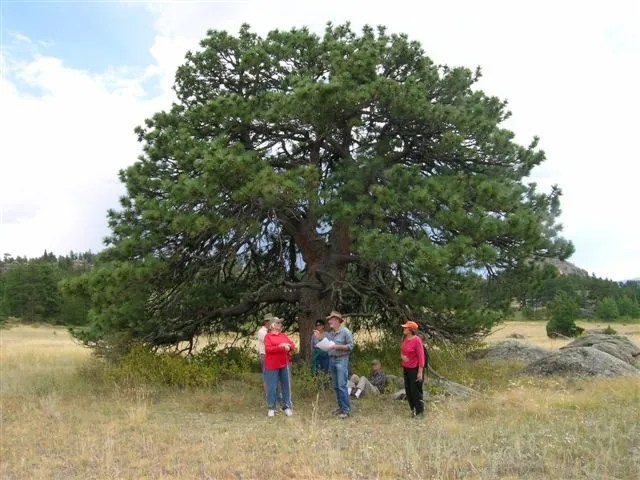
Here are side-by-side images of the tree, the left in 2009, the right this week in 2024.

Subsequent work with the tree established its age at 500 years old–putting its seedling stage at about the time Europeans ventured into the western hemisphere to establish their presence. Christopher Columbus, and so forth.

We’ve heard back now from Peter Brown at Rocky Mountain Tree-Ring Research, who has given us contact information for others involved in this early research. We’ll be following up.

I’m a bit taken back with what appear to be signs of aging over this past 15 years, after five centuries of growth. Even accounting for differences in seasons and artifacts of image-making, there appears to be substantially more dead growth in the branches, leaving noticeable open areas and needle-less areas across the bottom. Coloring is far less vibrant, but that may be a seasonal issue. (The forest areas in the background are deeper greens as well.)

Perhaps we need to be paying attention to this Old Guy. Are there preservation steps we should be taking to protect his future? Are there forestry maintenance issues we could be taking? What are the implications of cleaning out dead branches?