Meet at Gate 8, Saturday for Tree Thinning Project, 9-11am. 10/02/09 Update from Judd: Tree Trimming volunteers as of 9:00am Friday 1. Chain saw operators: Judd, Jeff, Odell and a GVM staff person
2. Transporters and sorters move trees to process area and then cut branches to shredder or slash pile truck
3. Branch cutters use long handled nippers to remove the branches: Judy
4. Shredders feed green branches into shredder: Harry and Susan
5. Anything: Ellen, Wynne, Jim Petrie
Steve and I will be marking trees at 1:00 today.
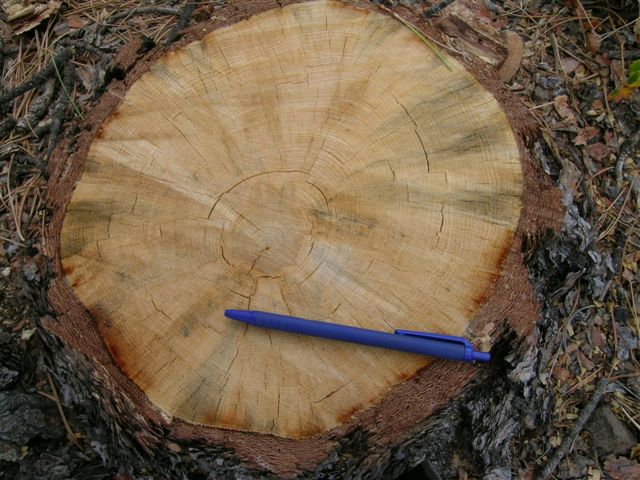
9/28/09 Email from Judd: “At our last Ecology Committee Meeting [9/16/2009] we decided to start a new initiative of tree thinning on GVM Greenbelts and common property. We further decided we should begin with the area around the Association Office, were we can demonstrate what a properly thinned forest should look like. We would have a demonstration forest to complement our demonstration garden. Continue reading GVM Tree Thinning Project→
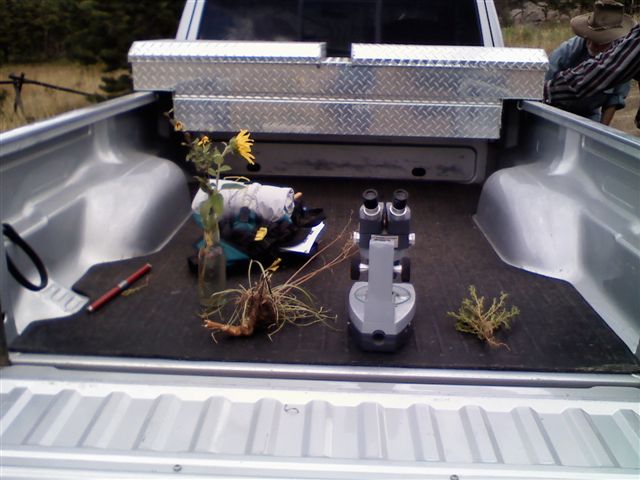
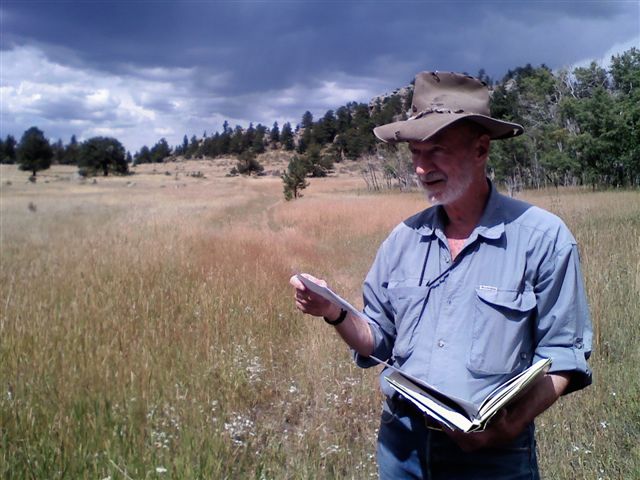
9/7/2009 Jim E. led a nature walk in the Forest Service inholding at Haystack Dr with Andre, Ellen, Judy, Karen D., Mary, Warren & Wynne on a partly sunny September afternoon. We started with an overview by Jim’s truck with a poster that included a table entitled “The World’s Oldest Known Trees,” and displays of annual sunflower, valerian root, and fetid marigold. Jim passed around the valerian root (the plant is called edible valerian or tobacco root) for us to smell and he read about its medicinal uses.
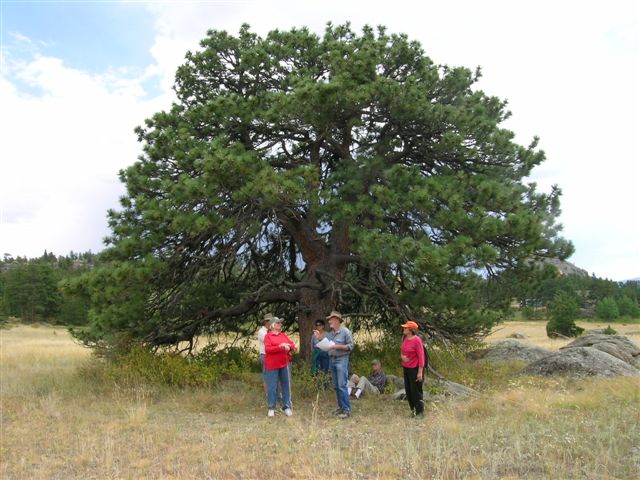
Trees: Jim showed the trees that he identified for Laurie Huckaby and John Popp, of the U.S. Forest Service, as potentially very old trees from the 1500s. He pointed out these old trees may have survived due to protection by surrounding rocks.
10/16/09 Jim emailed additional information: “During the May 20th outing with Laurie Huckaby, the local USFS’s key researcher on the fire history of this northern region, she said the few old meadow trees belonged to that ~1500 A.D. cohort, a period of ample moisture. Indeed, she’d cored a large ponderosa in that cluster, untouched by beetles. The pith date: 1575, with her estimated real age of 1535. Yet she’s found 700-800 year-old ponderosas up in the Red Mountain area to the north. Roughly 200-year intervals occur between cohorts, established during off-year drought cycles. The oldest known ponderosa — 880-890 — was found in Utah. That, based on a table, ‘The World’s Oldest Known Trees’ in a USGS/USFS poster (no date), Colorado’s Ancient Trees.”
Mountain Pine beetle: We saw several pine beetle-infested trees that had been cut down within a cluster of infested trees. The wood was then stacked and wrapped in plastic by the U.S. Forest service.
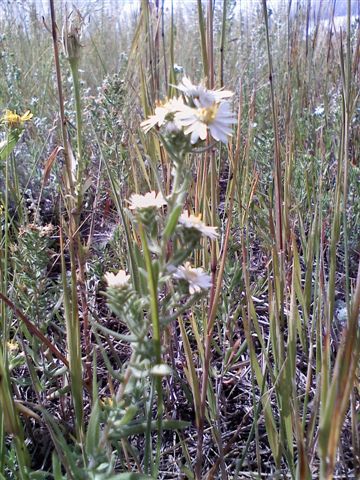
Flowers: yarrow, blanket flower, gumweed, black-eyed susan, smooth white aster or Porter aster, valerian, yellow owl-clover, yellow sweet-clover, bottle gentian, tansy aster, golden aster,
9/18/09 Email from Susan: “I talked with Chad (colleague of Tim Diamato’s) this morning about Plateau and Panoramic.” Please click “more…” below to read the information Susan received on these herbicides.
On 9/2/09 Tim D’Amato replied “In my experience, broadcast spraying Canada thistle once with Milestone does an excellent job. Spot-treating some escapes the following year may be necessary. I think this is evident at the plot sites on Haystack Meadow that Phil Westra and I sprayed a year ago. Milestone is labeled for use in wetland areas.”
9/3/09 For further details, Dow’s TechLine Publication Winter 2009 said yes: “Milestone can be applied up to the water’s edge on terrestrial sites.” I’ve excerpted parts of this article below with registration info, half life, FAQs. The article also references research on nontarget plants by Peter Rice, Division of Biological Sciences at the University of Montana.
2) 8/7/09 Renee Popp emailed Steve H. (GVM Manager), Judd (Ecology Committee Chair) and Tim D’Amato (Larimer County Land Steward Manager) that she has found a List B noxious weed: “I found another sulfur cinquefoil site again possibly with only one plant. This location is in the USFS/GVM greenbelt complex around Haystack Ct. This would be roughly 1/2 mile west of the first site I found it with Manhead Mtn in between. I pulled it because I wasn’t sure I could use chemicals on the USFS part. Do we have any type of agreement with the USFS for the management of that small parcel? Looks like abuot 20 acres just guessing. I pulled all the musk thistle heads in there and would like to return to spray the remaining musk plants. Am I allowed? Thanks, Renee”
3) 9/1/09 Jim Erdman spotted Sulfur Cinquefoil near Horn Peak Ct after his nature walk. He was with Andre, Karen, Mary, and Wynne.





 Glacier View Meadows Ecology