Category Archives: Botany

Lecture Series: Wildflowers!

(The program begins at about Minute 7:00 of the video.)

This is a program and a topic that draws people who love flowers, starting with Margie Caswell, who shared her pictures and stories with great passion. A couple of dozen folks joined us in this presentation, and their attention was focused and intense.
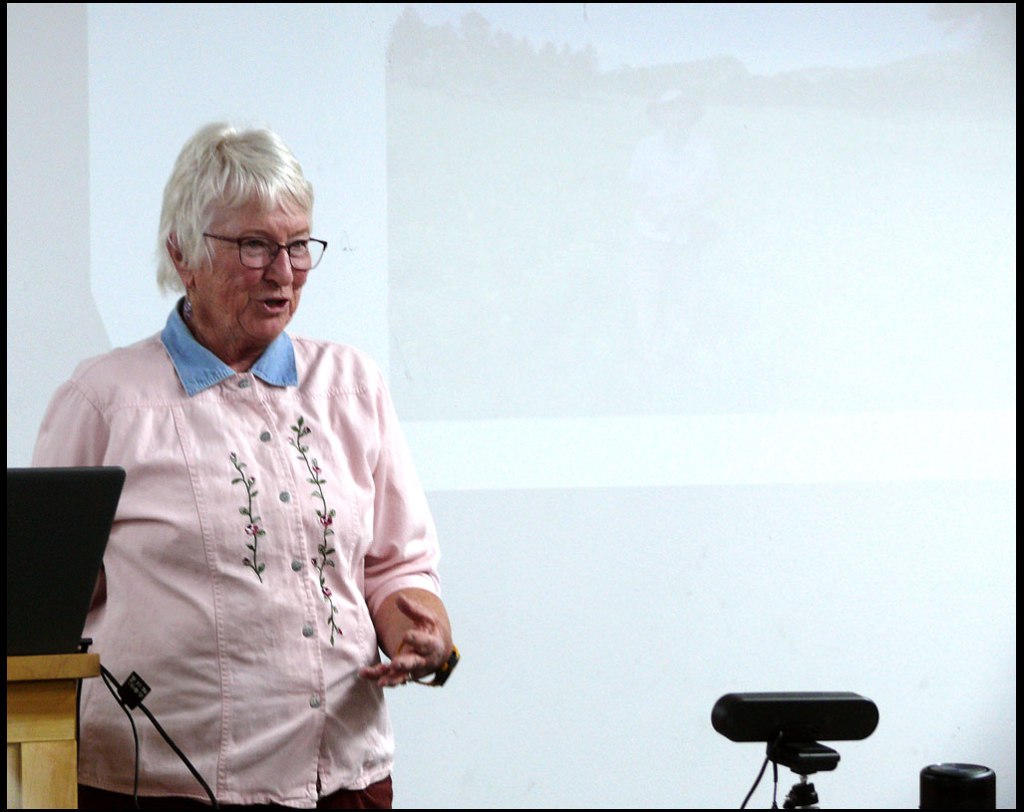
While there were clearly many listeners who knew their wildflowers pretty well, Margie’s presentation was especially enjoyable because of her simple, straightforward language.

“I was an elementary school teacher,” she introduced herself, “so I learned to keep things pretty simple in my explanations. I don’t use any latin names for the flowers. I like to call them by their common names.”

Her introduction continued with her sharing of what she most often refers to for reference books and materials. Though she had copies of her favorites on display, it would have been useful to have seen a printed list of materials–the one presented on screen was not remotely readable.

If you’re interested in printing this out, here’s a printable .pdf file you can download.

Many people seemed to appreciate her organization of flowers by color, and her descriptions of seasons and time of year were helpful. She gave particularly good details about where in our mountain neighborhoods she found her flowers. Above all, the photographs of her flowers, as shown in her PowerPoint presentation, were excellent.

Many of Margie’s photographs were really exceptional, closeups with great framing, zoomed in to bring the flowers to the forefront. Those of us who’ve tried capturing our favorite flowers know that’s not the easiest thing to do. We did lose some clarity in the photographs by the projection onto a bare white wall, and this is an issue our Lecture Series Planning Team probably needs to take a look at as we move forward.

In all it was a relaxed and fun evening being immersed in the floral and wildflower beauty our area abounds in, and a great inspiration for the upcoming season of exploration.

Next Month’s Mountain Living Lecture Series: Weed and Cheatgrass Identification and Management, June 11.

Many thanks to Terry and Susie Campbell and to Beth and Jim Lyne for putting together tonight’s presentation, and to Susie Campbell for her brilliant capturing of it on Zoom. It’s not as simple as it seems.
GVM Birdlist

As the season warms up, the birds return to our mountain neighborhood.

Ever wonder how many different birds we’ve seen here over the years?

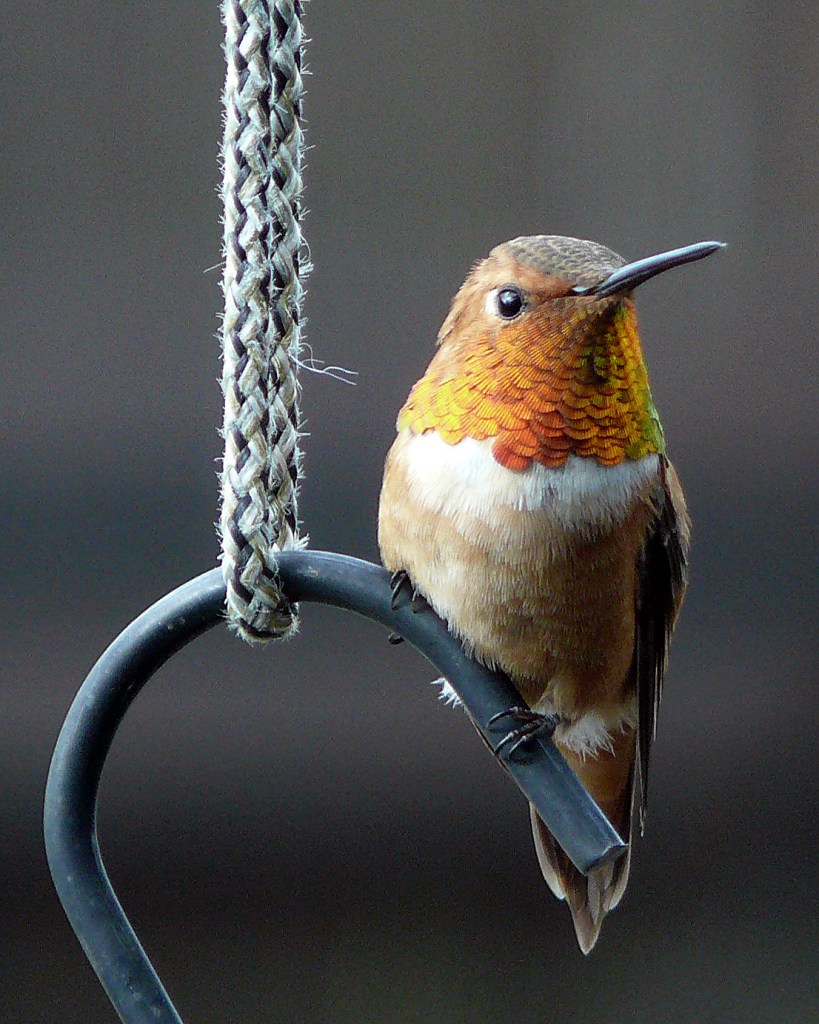
Rufous Hummingbird

We have folks who’ve lived here who have made a record for us. Among the earliest were Howard and Mary Alice Evans, who lived in a cliff-top home in Filing 7, facing the Mummy Range.

Howard was a devoted naturalist, a noted entomologist, faculty member of Colorado State University; Mary Alice was a science educator who co-authored several of Howard’s noted books and articles.

While they explored our trails and open spaces, they created the stopping points along the way in Crellin Trail, as they wrote about in their book A Naturalist’s Years in the Rocky Mountains.

They also started a Birdlist, which was updated after they moved back to the city and kept alive by a later resident, Jim Chisholm, who created a new list in 2000. Recently, we came across this treasure of a record as we’ve been redoing the Glacier View Meadows website.

2019 GVM Resident Terry Campbell has shared his expertise as a biologist to update the list, reorganize it by bird family names, and create a newer, user-friendly format. He verified the accuracy with neighbors Morris Clark and David Robertson.

We share it with the GVM community now.

Thanks for your work on this, Terry.

GVM Natural History Report Online

Manhead Mtn Photo
Manhead Mountain in Glacier View Meadows, CO (Photo by Jim Erdman)

In October 2012 Jim Erdman submitted a 26-page report http://mummyrangeinstitute.org/glacier-view-natural-history.pdf  to the Mummy Range Institute which has featured it on their website.  It is a “must read” for those of us who love the ecology, geology and beauty of GVM. Thank you Jim for your lucid writing and beautiful photos! For more information on the important work being done by the Mummy Institute, visit their website http://mummyrangeinstitute.org/.

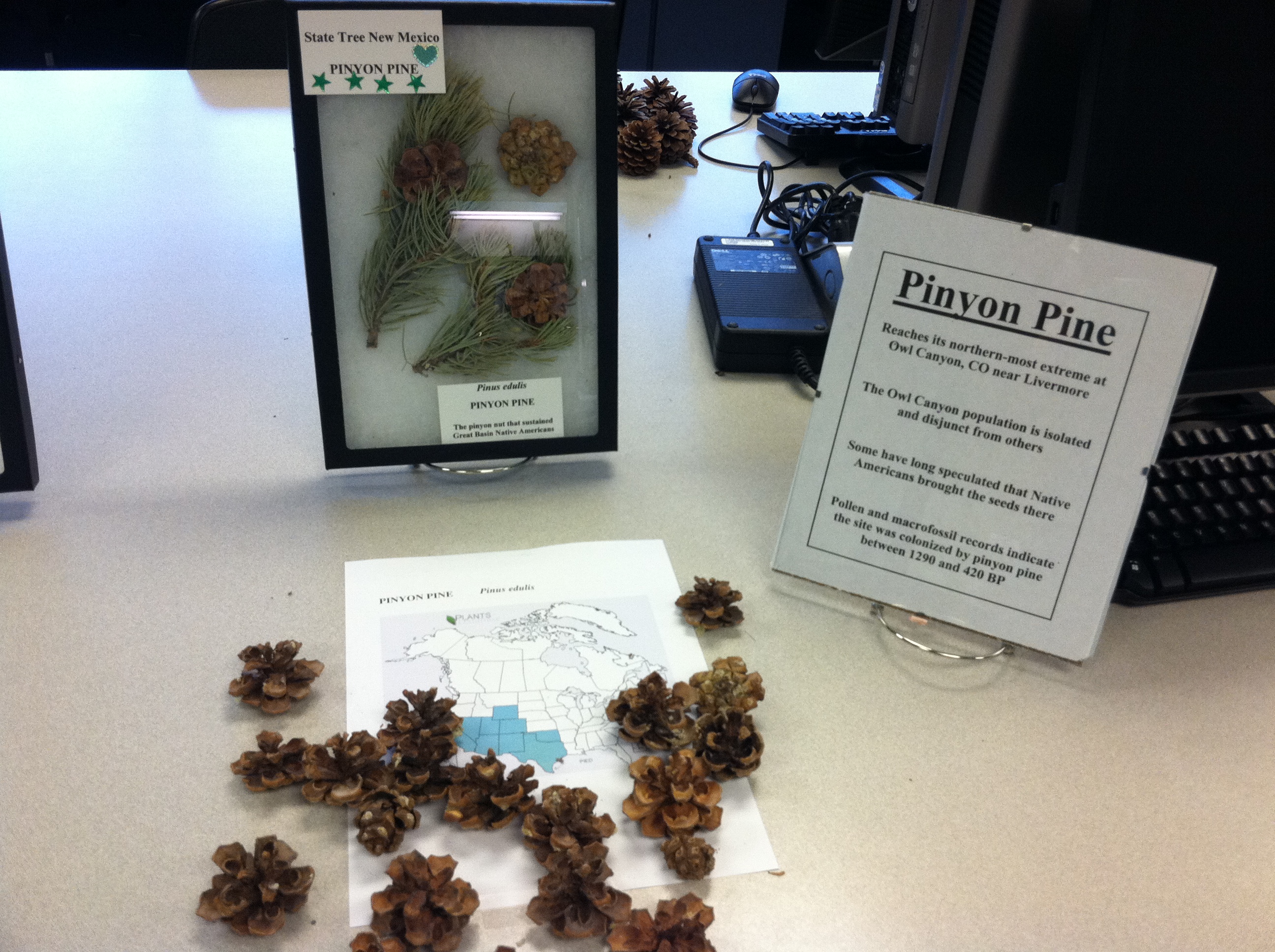
Pine Cone Exhibit at CSU

Renee at Project Pine Cone Exhibit

7/24/2011 Last Tuesday I was treated to a tour of Renee Popp’s new pine cone exhibit. It is currently located on the CSU Campus, Yates Hall Lab Room 209  (directions). It took me a little time to find, but there were signs posted on the main door and in the building, so I knew I was on the right track. When I arrived there was a sign saying Renee was working in the CSU Herbarium with a number to call.  She appeared in  just a couple of minutes and welcomed me to her extensive exhibit. She has collected cones and needles from over half of the world’s pine species, displayed in interesting categories and with distribution maps.  There are several examples from GVM, including an interesting witches’ broom in the diseases section. This is an amazing work in progress and to get more specimens, Renee will continue visiting arboreta and universities. She has also set up a Facebook Page so that other pine-lovers can donate cones and share information. If you want a nice escape from the heat, stop by Project Pine Cone on Tuesdays and Thursdays between 10 am and 2 pm. During the summer you can park free at any of the Z parking lots at CSU.

Project Pine Cone Exhibit

6/17/2011 From the Coloradoan: “Project Pine Cone is a display of pine cones from around the world in a celebration of our “lowly” or “everyday” pine. It is a hands-on, educational exhibit assembled by local professional botanist, Renee Galeano-Popp. The goal is to share the beauty and diversity of pines while stimulating interest in botany, forestry and ecology. Colorado State University Herbarium is hosting PPC this summer in hopes that local school teachers will incorporate PPC as a learning tool into their science curricula.”