Category Archives: Wildflowers

Lecture Series: Wildflowers!

(The program begins at about Minute 7:00 of the video.)

This is a program and a topic that draws people who love flowers, starting with Margie Caswell, who shared her pictures and stories with great passion. A couple of dozen folks joined us in this presentation, and their attention was focused and intense.
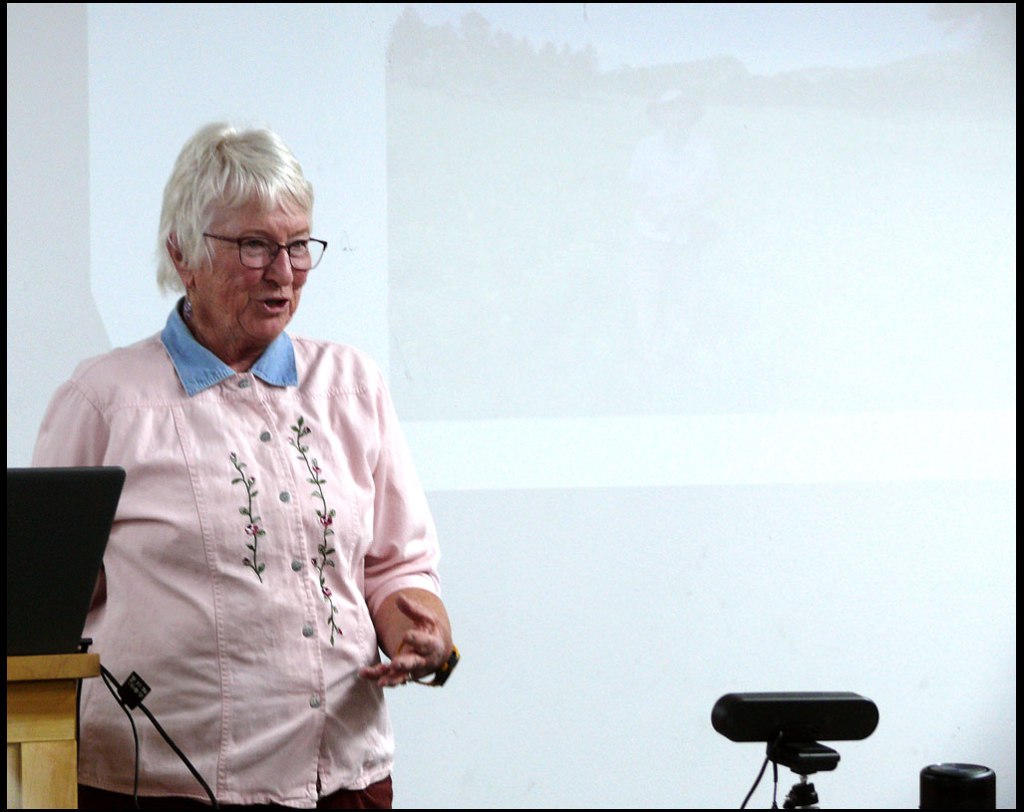
While there were clearly many listeners who knew their wildflowers pretty well, Margie’s presentation was especially enjoyable because of her simple, straightforward language.

“I was an elementary school teacher,” she introduced herself, “so I learned to keep things pretty simple in my explanations. I don’t use any latin names for the flowers. I like to call them by their common names.”

Her introduction continued with her sharing of what she most often refers to for reference books and materials. Though she had copies of her favorites on display, it would have been useful to have seen a printed list of materials–the one presented on screen was not remotely readable.

If you’re interested in printing this out, here’s a printable .pdf file you can download.

Many people seemed to appreciate her organization of flowers by color, and her descriptions of seasons and time of year were helpful. She gave particularly good details about where in our mountain neighborhoods she found her flowers. Above all, the photographs of her flowers, as shown in her PowerPoint presentation, were excellent.

Many of Margie’s photographs were really exceptional, closeups with great framing, zoomed in to bring the flowers to the forefront. Those of us who’ve tried capturing our favorite flowers know that’s not the easiest thing to do. We did lose some clarity in the photographs by the projection onto a bare white wall, and this is an issue our Lecture Series Planning Team probably needs to take a look at as we move forward.

In all it was a relaxed and fun evening being immersed in the floral and wildflower beauty our area abounds in, and a great inspiration for the upcoming season of exploration.

Next Month’s Mountain Living Lecture Series: Weed and Cheatgrass Identification and Management, June 11.

Many thanks to Terry and Susie Campbell and to Beth and Jim Lyne for putting together tonight’s presentation, and to Susie Campbell for her brilliant capturing of it on Zoom. It’s not as simple as it seems.

2024 Mountain Living Series

This year’s programming once again includes inspiration, encouragement, and guidance in making the most of the world we live in.

April 9: Fire Mitigation in Larimer County, from the Sheriff’s Office Wildlife Partner Program.

May 14: Wildflowers! From Margie Caswell, pictures and stories.

June 11: Weed and Cheatgrass, our annual program from great Larimer County Weed District resource, Casey Cisneros, and our local specialist, Ted Sammond.

June 15: Weed Management Field Day, with hands on guidance and access to materials.

July 9: Brock McArdle, Colorado Parks and Wildlife, with his Canine Partner Cash.

August 13: Solar energy in the Mountains, with Solar Sandbox specialist Justin Wojtarowicz.

September 10: Culturally Modified Trees. WTH are they? Pretty interesting angle on local history.

October 10: Bird Conservancy of the Rockies.

For more information, check out the GVM Ecology Website.

Once again this year, we give thanks to our Ecology Team Series coordinators, Susie and Terry Campbell and Beth and Jim Lyne.

GVM Natural History Report Online

Manhead Mtn Photo
Manhead Mountain in Glacier View Meadows, CO (Photo by Jim Erdman)

In October 2012 Jim Erdman submitted a 26-page report http://mummyrangeinstitute.org/glacier-view-natural-history.pdf  to the Mummy Range Institute which has featured it on their website.  It is a “must read” for those of us who love the ecology, geology and beauty of GVM. Thank you Jim for your lucid writing and beautiful photos! For more information on the important work being done by the Mummy Institute, visit their website http://mummyrangeinstitute.org/.

Mule-deer Nibbled Ponderosa Tips

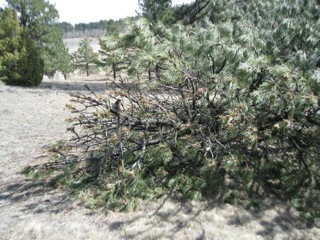
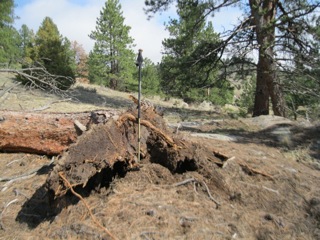
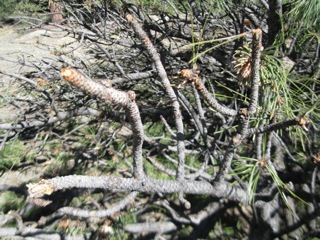
4/12/2012 Jim E sent this information along with photos, thanks Jim!  “Yesterday I happened to be walking along a game trail here in Glacier View Meadows and spotted a fairly newly wind-thrown ponderosa.  As I’d seen easily accessible branch tips nibbled on along Haystack Rd sometime ago, and didn’t know what did it, this seemed to clinch deer as the cause. The roots are extremely shallow as shown here. The trunk leading off to the left. Here’s the top of the tree showing easily reached – by deer – relatively palatable needles and branch tips.” Jim observed about a dozen piles of deer scat around the tree suggesting that deer are the culprits. He has sent an email to Mark from the Division of Wildlife to ask about mule deer forage habits.

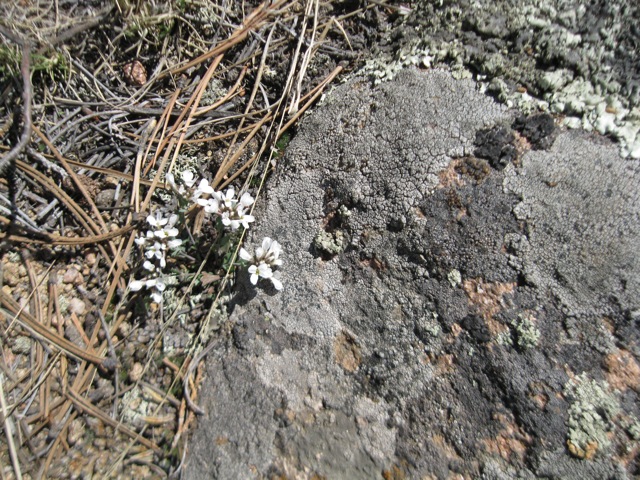
“Finally, this closeup showing a couple plants of wild candytuft (Noccaea [formerly Thlaspi] montana) growing through the pile, which must have been laid before the spring-bloom season.  I’ve Olaus Murie’s 1958 classic, A Field Guide to Animal Tracks, that includes photos of droppings.  They show the winter feeding(or dry diet), and the soft type that results from green or succulent food in summer.  Maybe your folks can tell.”

Early Bloomers

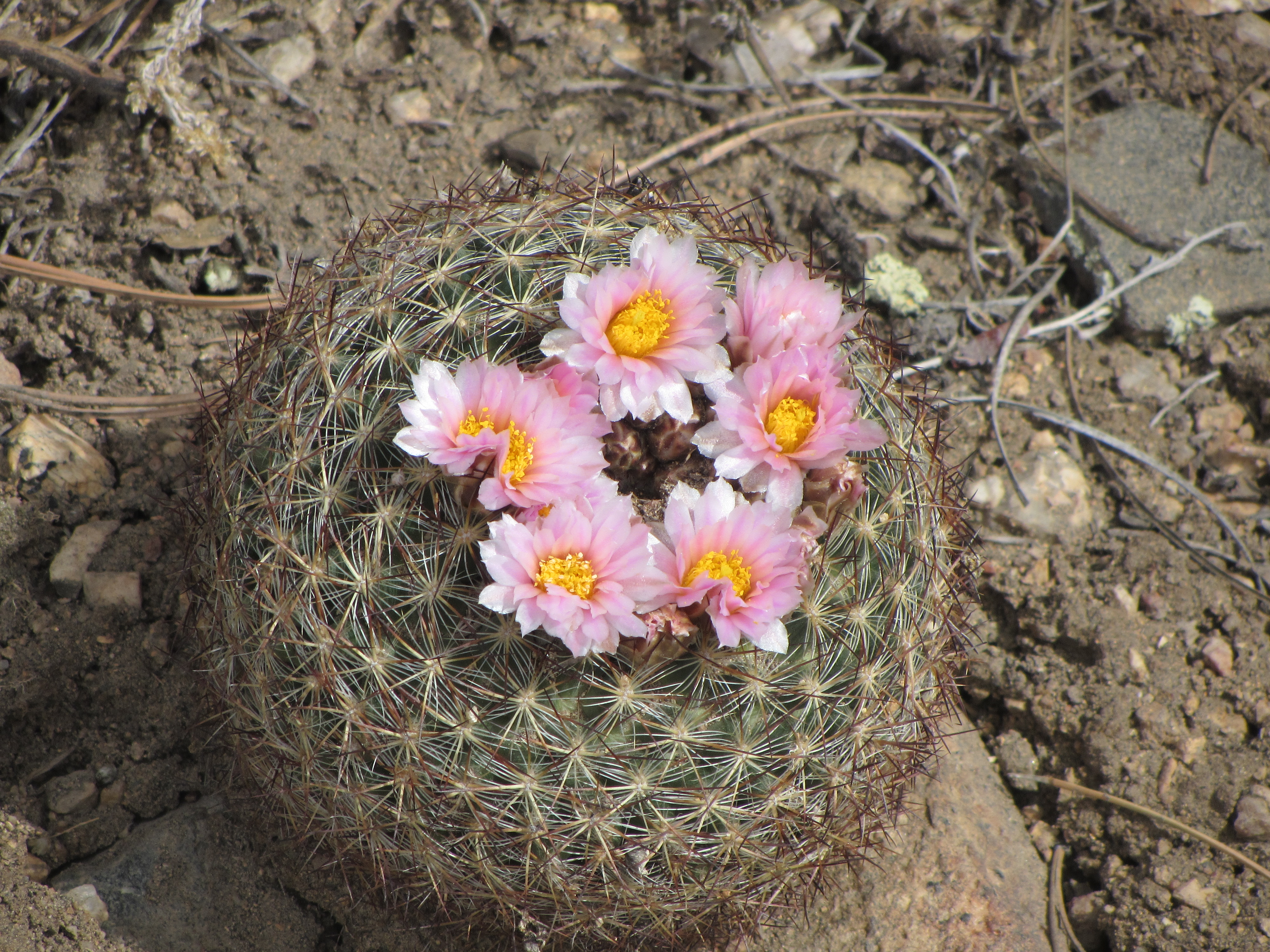
3/31/2012 From Ellen: On a late morning walk in Filing 10 near our house, I spotted Spring Beauties, Pasque Flowers and Ball Cacti in bloom.

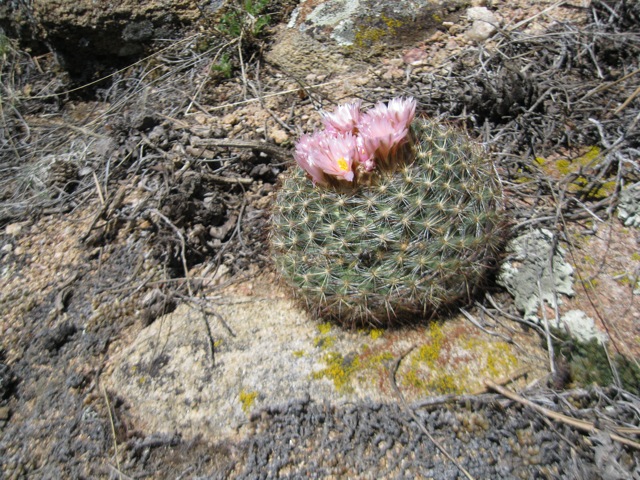
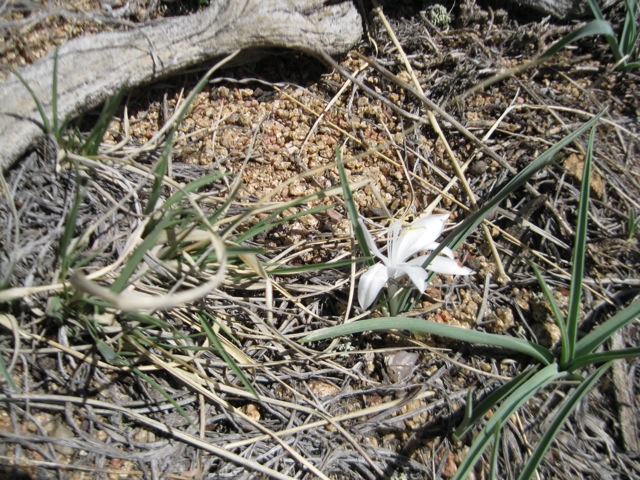
4/8/2012 A week later Jim E. wrote this from his walk on April 7: “Well, Saturday afternoon during my usual amble nearby, I spotted this early-blooming Ball Cactus – but seemingly much earlier than I’m aware.  Photographed ~noon today, these three. This Candytuft is another early bloomer – in the mustard family (Brassicaceae, formerly Cruciferae – note the four ‘cross’ petals).  What a pleasant surprise, the day before Easter.  Why the name ‘candytuft’ I won’t get into – too involved taxonomically. This, a real surprise – Sand Lily; and only one spotted! And in gravelly soil; but what else is there up here in this Sherman Granite?And today’s mid-afternoon saunter along the FS’ Mount Margaret Trail near Red Feather Lakes, a repeat of Pasqueflower (in a controlled burn; note charred fragment).  I reported this in bloom on the FS’ Elkhorn Creek Trail on April 2nd of last year, so this year’s blooms aren’t unusually early. Finally, yes – dandelion, which I don’t even have to show.”